
When protesters chained themselves to the doors of Anthropic’s San Francisco headquarters and rallied outside the Nasdaq in New York on 19 November 2026, they were responding to a watershed moment in modern capitalism: the record-breaking public market debut of a frontier artificial intelligence lab. Beneath the chants lies a moral anxiety that reaches far beyond Silicon Valley. The central question is: what happens when a technology capable of reshaping human consciousness, labour and warfare becomes answerable primarily to shareholder profit?
From a Catholic perspective, the scenes outside Anthropic are both a sobering validation of the Church’s social doctrine and an urgent pastoral summons. The Church neither endorses anti-technology panic nor calls for halting scientific progress. She insists, however, that every human invention be measured against one non-negotiable standard: the inviolable dignity of the human person.
From the Vatican’s note Antiqua et Nova to Pope Leo XIV’s encyclical Magnifica Humanitas, the Church has walked a middle path between blind optimism and Luddite fear. Like the protesters, Catholic Social Teaching warns against a technocratic paradigm in which market efficiency overrides the common good. Machines possess neither conscience, soul nor moral agency, so decisions of life and death can never be delegated to an algorithm. Concern over the energy and water demands of data centres echoes the Church’s call for integral ecology. Yet the Church also parts ways with activist fatalism, asserting that artificial intelligence is not a rival deity; it is a human artefact. The real danger is not that machines will acquire souls, but that, as Fr. Dr. Melchizedek Okpala has observed, human beings will willingly surrender their own agency, judgement and moral responsibility.
Beyond fears of robot uprisings, the genuine threats of AI are quieter and more immediate. The first is the atrophy of moral and intellectual agency, as students, workers and leaders outsource discernment and writing to predictive models. The second is the erosion of shared truth whereby communities cannot tell authentic human witness from synthetic simulation, social trust unravels, and with it the transmission of faith. The third is deepening inequality, as wealth concentrates in a few monopolies. The rush to public markets also shows that corporate self-regulation is an illusion, which makes binding law and an educated citizenry indispensable.
If regulation is the first shield, grassroots media and digital literacy is the second. This is a conviction I have long advanced, including through the Communication Week programmes of the Catholic Bishops’ Conference of Nigeria. It is founded on the thesis that society cannot protect freedom simply by banning tools; it must form people capable of governing them. True literacy goes beyond operating software. It is the capacity to ask who built a system, what values are embedded in it, what incentives drive its outputs, and how those outputs shape human desire.
Consequently, Catholic schools, which exist to educate the whole person, must lead. Banning AI tools only drives their use underground. Instead, schools should teach young people how large language models work, why they fabricate, how bias enters training data, and how to verify sources. To counter cognitive offloading, they should reclaim slow thinking through Socratic dialogue, handwritten reflection and oral examinations. Every coding or robotics lesson should ask not only whether something can be built, but whether it ought to be, and whom it serves. Schools must also partner with parents, helping families set healthy screen boundaries and keep honest conversation open with adolescents.
In a similar direction, catechesis, too, must evolve. Faith formation has always adapted to the communication realities of its age, from stained glass to the printing press. In the algorithmic age it must become a school of digital discernment, drawing on the tradition of the discernment of spirits to help young people recognise how algorithms provoke outrage, envy, vanity and despair, and to distinguish the noise of a feed from the quiet voice of the Holy Spirit. It must also proclaim that the human person is embodied, relational and made in God’s image, which is why a chatbot can never offer genuine empathy, spiritual direction or sacramental grace. In effect, parishes and youth ministries should cultivate face-to-face fellowship through liturgy, service to the poor and shared meals, where people find a belonging that cannot be digitised. And rather than retreating from digital spaces, parish communicators should enter them creatively, with storytelling, music, visual art and honest dialogue.
In conclusion, the protests outside Anthropic remind us that humanity is uncomfortable about surrendering its future to unbridled technological momentum. The answer will not come from street protests or regulation alone. More importantly, it will also come from forming people with the wisdom to question machines, the courage to defend truth, and the faith to remember that technology must always bow before the sacred dignity of the human person.
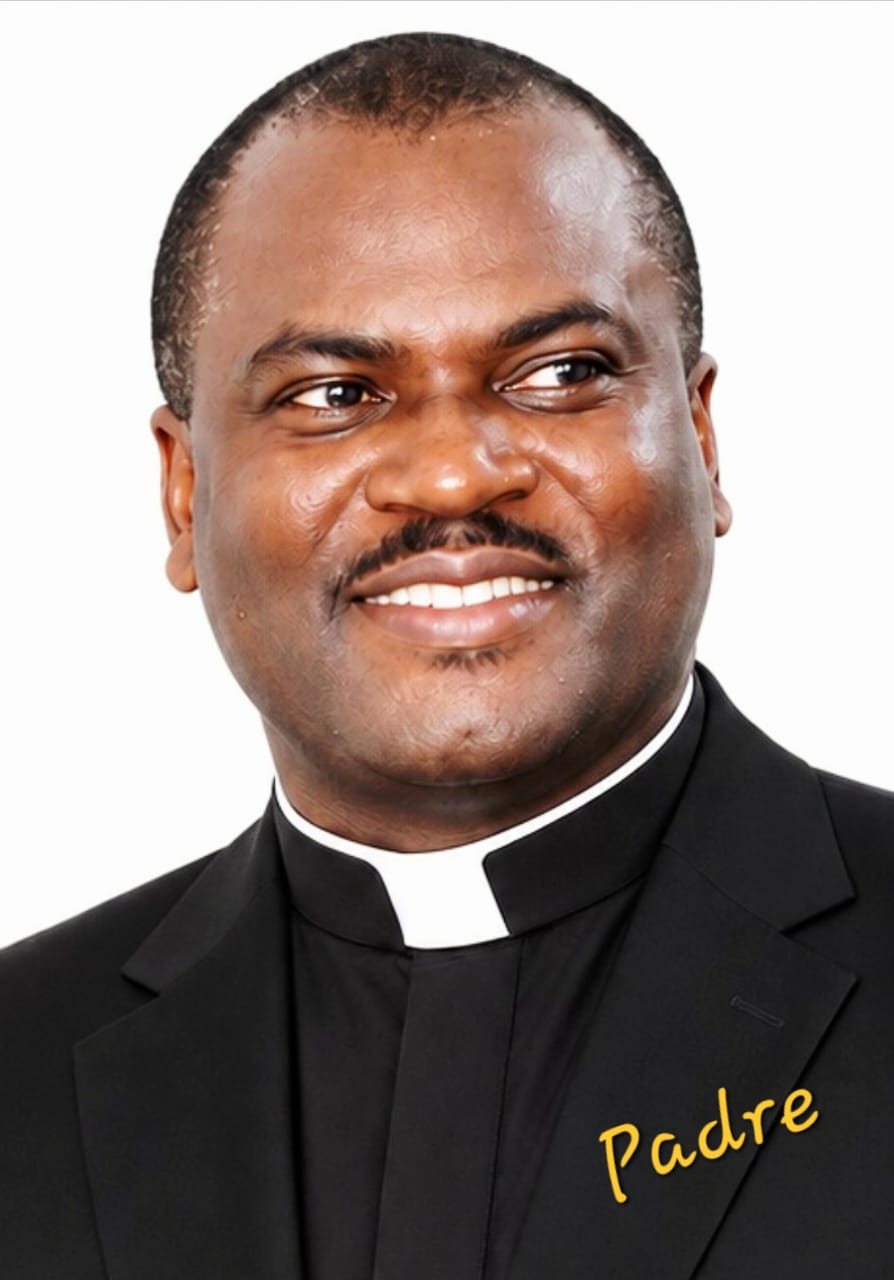
Rev. Fr. Dr. Michael Nsikak Umoh is a priest of Lagos Archdiocese, founder of the Centre for Media Development, and the immediate past National Director of Social Communications at the Catholic Secretariat of Nigeria in Abuja. 08023062860, padremikeumoh@gmail.com


Comments
No comments yet. Be the first to respond.